
Recipes
Natural Vanilla vs Artificial Vanillin: Separating Fact from Fiction
Introduction
On a label, terms like « vanilla flavoring, » « vanilla extract, » or « vanillin » absolutely do not mean the same thing. Here’s how to decode what you’re actually buying.
What Is Vanillin?
Vanillin is the main aromatic molecule responsible for vanilla’s scent. In a natural pod, it’s accompanied by hundreds of other aromatic compounds that create the complexity of the fragrance. Synthetic vanillin, industrially produced from lignin or petrochemicals, reproduces only that single molecule — in a much flatter, one-dimensional way.
How to Read a Label
- « Vanilla pod » or « natural vanilla extract »: a product derived directly from the plant.
- « Natural vanilla flavoring »: aromatic molecules of natural origin, but not necessarily derived from vanilla itself.
- « Vanilla flavoring » or « vanillin » with no further detail: most likely a synthetic molecule.
The Difference in Taste
Natural vanilla offers layered aromatic richness: woody, fruity, and floral notes on top of the core vanilla flavor. Artificial vanillin, on the other hand, delivers a single sweet, vanilla-like note, often perceived as harsher or more artificial on the finish.
Why the Price Difference?
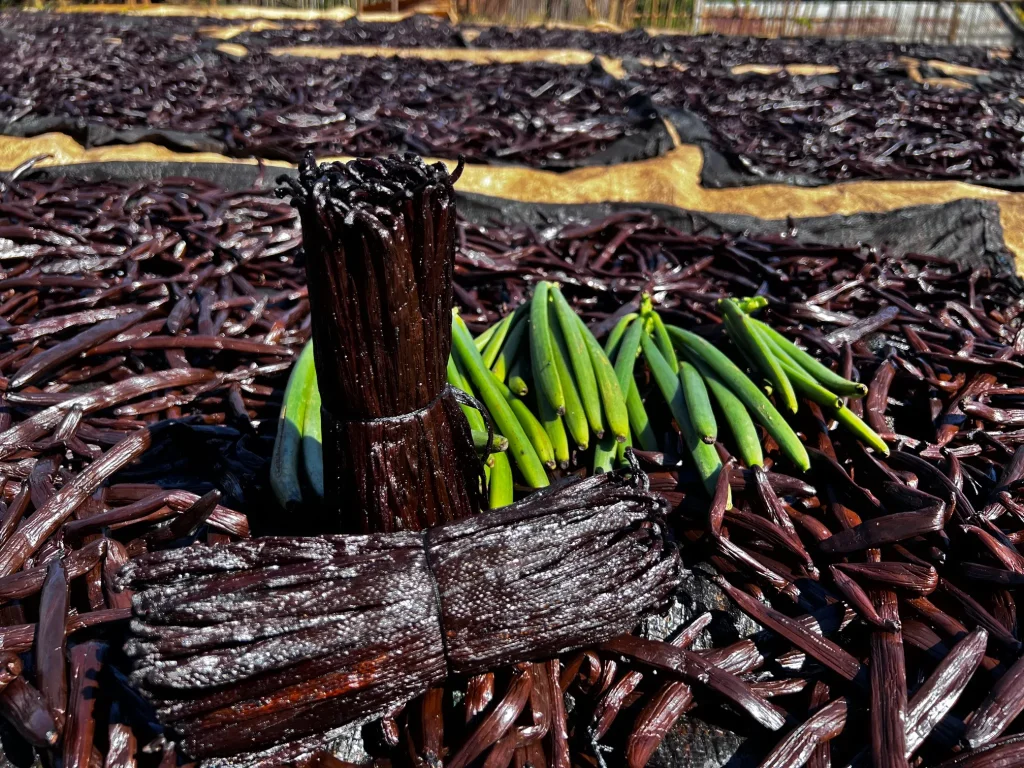
Growing vanilla is a long, labor-intensive process: hand pollination, harvesting, and curing that spans several months. This work explains the significant price gap compared to synthetic vanillin, which is produced in a matter of hours in a lab.
Conclusion
Choosing natural vanilla means choosing an inimitable aromatic complexity and supporting a demanding agricultural supply chain, from Malagasy soil all the way to your plate.